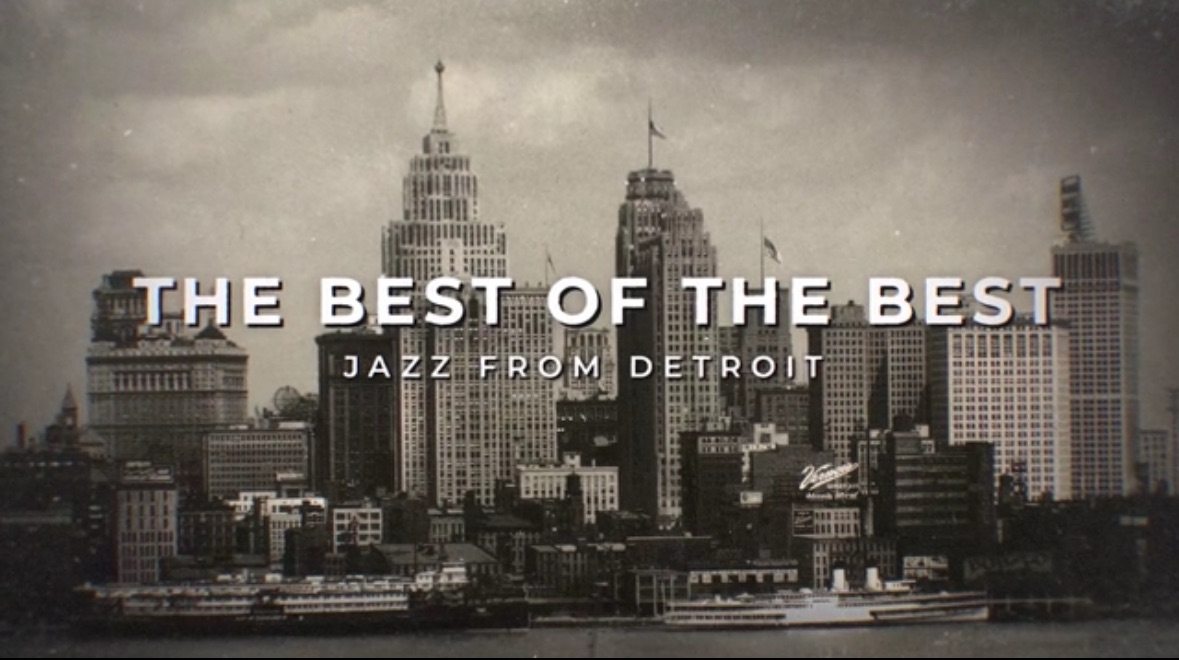
Detroit has always been showcased as a music city and it is known that some of the greatest talents in music emerge from Detroit however this but this documentary makes one thing certain: you can’t tell the history of jazz without telling the history of Detroit.
The Best of the Best-Jazz from Detroit is a love letter to the city where the sound was born out of perseverance and community. The film opens with a credit from Otis Williams of The Temptations stating that music wasn’t simply a pastime in Detroit. It lived in the streets, poured out of clubs, and connected people for generations. That spirit is the heartbeat of the documentary.
The film sets the story against the rise of Detroit beginning with the automobile industry, in which Henry Ford’s $5 workday drew thousands of Black families out of the rural South during the Great Migration. Detroit was the promise of a better life-a place where Black workers might get the same wage as their white counterparts. Unknowingly it also became the birthplace of something far more rich: a new Black cultural identity anchored in blues, gospel, and swing. On the lower east side of Detroit, later called the Black Bottom, and its vibrant sister neighborhood of Paradise Valley, music shaped the community and served as backdrop for the livelihood and entertainment. A Black mecca, where there were clubs, Black-owned restaurants, and stars like Lena Horne taking the stage as the birth of swing matured into a force.
The film captures the electricity of those years. Detroit was very much a gospel town that incorporated the blues and highlighted jazz. Bebop, invented by Charlie Parker and Dizzy Gillespie, also found a spiritual home there. Many Black homes had upright pianos from Grinnell Brothers, a sign that artistry wasn’t reserved for the elite but was a part of everyday life. Music was the language of the community, and the community, in turn, nurtured its musicians. Barry Harris becomes the central figure in this chapter as his mentorship shaped those who would go on to influence contemporary jazz around the world.
While the documentary highlights these key times it refuses to romanticize and instead it recognizes the underside of police harassment in Black Bottom and the supposed urban renewal that was an excuse for demolition, with a freeway cutting through the heart of Paradise Valley. Both would be gone by the 60s. This continued on in 1967, when a raid on an after-hours club sparked 5 days of violence, leaving 43 people dead, 33 of them being Black. And someone scrawled on a wall, “This city is the blueprint for hell,” and Detroit would never be the same again.
In watching, one thing I admired about the film is that it never allows the story to end in despair. It shifts to resilience. As institutions crumbled, musicians fought to preserve the culture. Trumpeter Marcus Belgrave put four decades into training young players who in turn would become giants: Geri Allen, Kenny Garrett, Regina Carter, Robert Hurst, Karriem Riggins. Today, Rodney Whitaker carries that torch through the Gathering Orchestra, creating a new generation of storytellers who understand the power and responsibility of the music they inherit.
The documentary concludes by taking viewers to the present day Detroit Jazz Festival-the largest free jazz festival in the country. It is a homecoming, a testament that jazz didn’t die in the demolition of Black Bottom or in the smoke of ’67, but lived, adapted, and continued to echo through a city defined by grit and reinvention. Detroit today is not a place from which people run; it’s a place to which they return, claim, and celebrate. The Best of the Best: Jazz from Detroit isn’t a film about the music; it’s a reminder that Detroit always overcomes, and great music, like the city itself, finds a way to rise again.